
Slid Into a Ditch on an Icy Illinois Road? How Off-Road Recovery Works
August 10, 2026

QUICK ANSWER: If your car slides off an icy road and settles into a ditch, stay inside with your seatbelt fastened, turn on hazard lights, and call for a recovery instead of trying to drive or rock your way out. A trained operator reads the angle of the vehicle, the ground underneath it, and the slope of the ditch before rigging a winch line that pulls the car out along a controlled path. Central Illinois ditches often hide culverts, standing water, or frozen mud under a thin crust of snow, so what looks like a simple pull can turn into a much bigger problem if it's rushed. The right approach protects your undercarriage, your suspension, and anyone else who has to stop nearby to help.
One second you're holding a steady line down a county road outside Metamora, and the next the back tires lose their grip on a patch of black ice you never saw. The car drifts sideways, the shoulder drops away faster than expected, and you come to rest nose-down in a ditch with the front wheels buried and the frame resting against packed snow. The engine is still running, the radio is still playing, and you're sitting there doing the math on how bad this actually is.
It rarely feels as dramatic as it sounds. Most drivers walk away from a ditch slide without a scratch, and the car itself is often just stuck rather than damaged. But central Illinois ditches are not flat gravel shoulders. They're graded to drain water off the road, which means they slope, they hold moisture, and in winter that moisture freezes into a surface that looks solid until a tire breaks through it. Getting the vehicle back out safely takes more than a chain and a running start.
Why a Ditch Slide Is Different From a Simple Stuck Car
A car parked in a flat, open lot that's lost traction is a plain pull. A car angled into a ditch is a different problem entirely, and the difference matters for how the recovery gets handled.
The angle changes where the stress goes
When a vehicle sits nose-down or tilted to one side, its weight isn't distributed the way it is on level ground. Pulling from the wrong point, or at the wrong angle, puts strain on a bumper mount, a control arm, or a subframe that was never built to take a sideways load.
The ground underneath is unknown until someone checks it
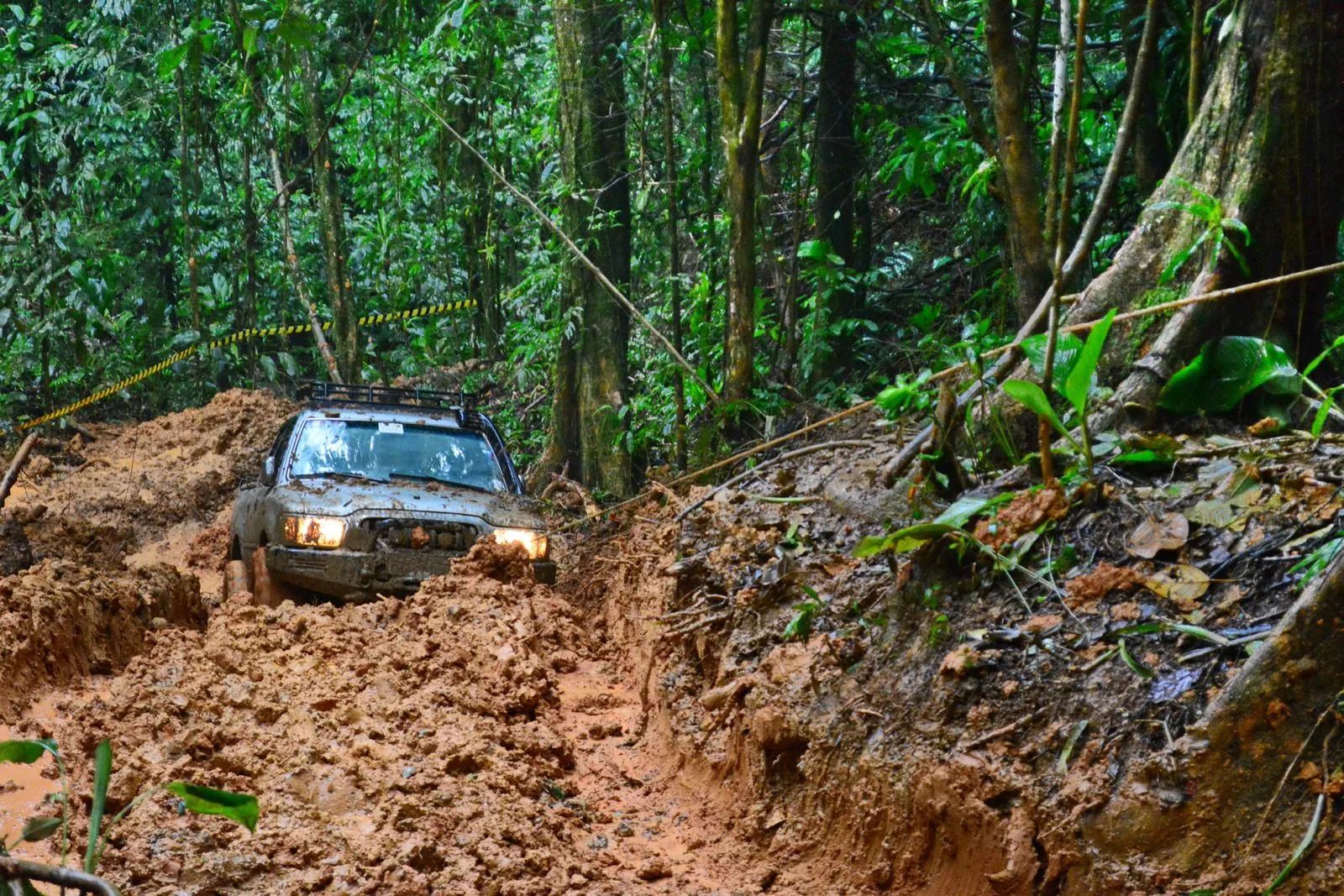
A ditch that looks like packed snow might have standing water frozen a few inches down, a culvert pipe running through it, or soft mud that hasn't fully frozen. An operator has to assess what's actually supporting the vehicle before deciding how to pull it.
Traffic doesn't stop for a recovery
A car in a ditch on a rural route or a county road is often still close to the travel lane, and other drivers are dealing with the same icy conditions that put you there. Positioning the recovery truck safely, with proper lighting and clearance, is as much a part of the job as the pull itself.
How the Recovery Actually Happens
Assessment comes before any equipment gets used
The operator walks the scene first, looking at how deep the vehicle has settled, which direction it needs to travel to reach solid ground, and whether the ditch has hazards like a culvert opening or a hidden drop that a straight pull could aggravate. This step is what separates a clean recovery from one that causes more damage than the original slide.
Winching does the work, not the engine
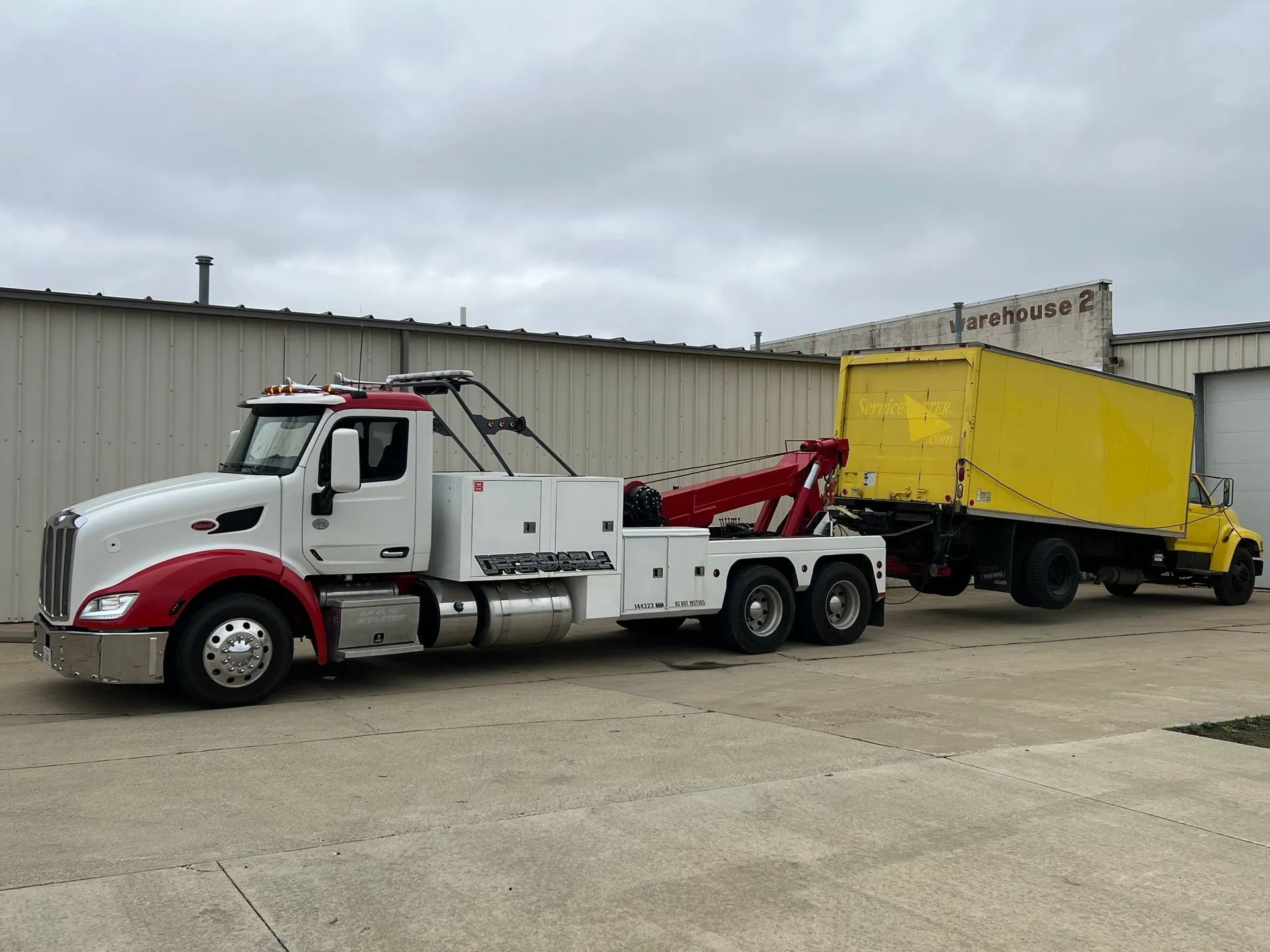
A cable or synthetic rope gets attached to a rated recovery point, never a plastic bumper cover or a decorative tow hook that isn't built for load. The recovery truck anchors itself, often using its own weight and sometimes additional stabilization on ice, then applies a slow, steady pull along the path the operator planned. There's no gunning the throttle and no jerking the line. A controlled winch-out moves the car a few feet at a time, checking the line and the vehicle's response the whole way.
The pull follows a chosen line, not the shortest one
If the straight-line path back to the road runs over a culvert or through deeper standing water, the operator angles the pull to avoid it, even if that means the recovery takes a few extra minutes. A car that comes out clean along a longer path beats one that gets re-stuck or damaged taking a shortcut.
Traction aids support the pull when needed
On packed snow or ice, boards or mats placed under the drive wheels can help the vehicle assist its own recovery once it's freed from the ditch angle, reducing strain on the winch line and getting the car moving under its own power sooner.
A post-pull check catches anything that needs attention
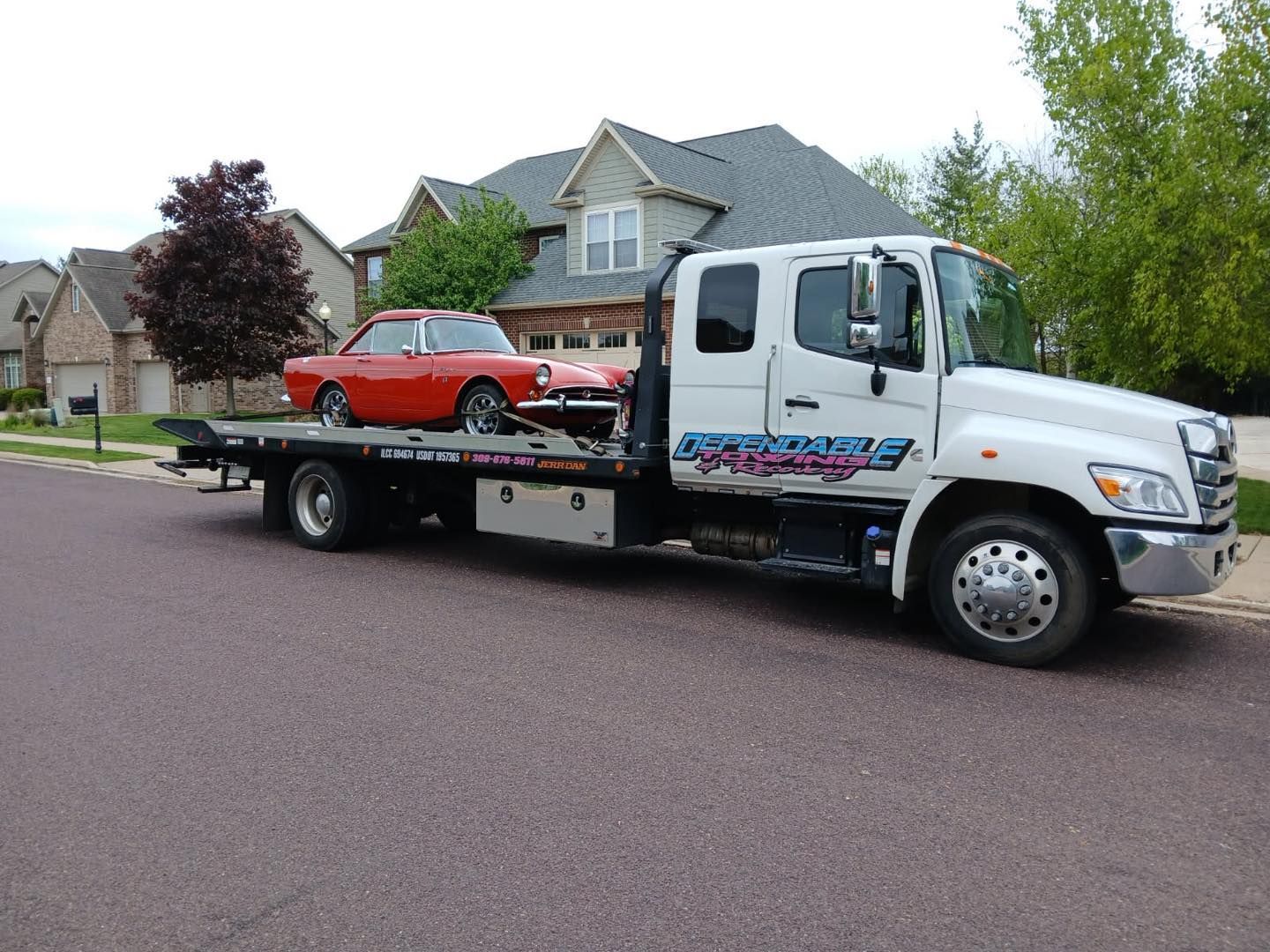
Once the vehicle is back on solid ground, the operator checks the undercarriage, tires, and fluid lines for anything that shifted or was damaged in the slide itself, separate from the recovery. This is also when it becomes clear whether the car can be driven away or needs to go out on a flatbed.
TIP: Keep your headlights and hazard lights on the entire time you're waiting, even during the day. A car angled into a ditch is harder for other drivers to spot than one sitting flat on the shoulder, and visibility matters more than almost anything else until the recovery truck arrives.
What to Do While You Wait for Recovery
The minutes between the slide and the recovery truck's arrival matter more than most drivers expect, especially in cold weather.
Stay inside with your seatbelt on unless the position of the car makes that unsafe
The Illinois Department of Transportation's winter driving guidance recommends staying with your vehicle if you become stranded, rather than walking along an icy roadway. A car in a ditch is still a vehicle other drivers need to see and avoid, and moving around outside it on an icy shoulder adds a fall risk on top of the traffic risk.
Resist the urge to gun the throttle
Spinning the drive wheels in snow or on ice digs the tires deeper and can pack ice underneath the car, turning a simple pull into a harder one. If the car didn't come free on the first calm attempt, stop trying and wait for the recovery.
Check your exhaust pipe if you plan to keep the engine running for heat
AAA and multiple state transportation agencies warn that a tailpipe packed with snow, ice, or mud can force carbon monoxide back into the cabin. If the rear of the car is buried, either clear the pipe by hand or run the engine only in short bursts with a window cracked, rather than continuously.
Set out a visible marker if you have one and it's safe to do so
A reflective triangle, road flare, or even a bright cloth tied to the door handle gives approaching drivers more warning on a road where black ice already reduced everyone's reaction time.
Call before you try anything else
The sooner a recovery crew has your location and a description of how the car is sitting, the sooner they can bring the right equipment. A vehicle nose-down in a ditch and one sitting sideways across a culvert need slightly different setups, so a clear description saves time on scene.
WARNING: Never stand behind or directly in line with a winch cable under tension. If a rated recovery point, shackle, or strap ever fails, the stored energy in the line can snap it back with enough force to cause serious injury. Stay well clear of the pull path and let the operator manage the rigging.
Reading the Warning Signs Before It Happens
Most ditch slides in this part of Illinois follow a pattern, and recognizing it can help you avoid becoming part of it.
Bridges, overpasses, and shaded stretches ice first
These sections lose heat faster than open pavement because air can circulate above and below them, or because tree cover blocks the sun that would otherwise help melt a thin layer of frost. IDOT's own winter driving guidance flags intersections, ramps, bridges, and shaded areas as spots prone to icing even when the rest of the road looks clear.
Black ice hides on roads that look wet, not icy
A thin, clear layer of ice can look like a wet spot reflecting headlights rather than a frozen hazard. Slowing down before you can see whether a stretch is actually wet or actually ice buys you the reaction time you'd otherwise lose.
Cruise control removes your ability to react
Several state transportation agencies specifically advise against cruise control in snow and ice because it delays how quickly the car responds when a tire loses grip, which is exactly the moment a small loss of traction can turn into a full slide toward the shoulder.
A slide doesn't have to end in a ditch if you react early
If the back end starts to step out, the common guidance from safety organizations is to ease off the accelerator, avoid braking hard, and steer gently in the direction the rear of the car is sliding rather than fighting it. Overcorrecting is often what sends a car from a manageable slide into an uncontrolled one that ends off the roadway.
Frequently Asked Questions
Can I get my own car out of a ditch without calling for recovery?
Sometimes, if the shoulder is flat and your tires maintain traction. If the vehicle is angled, deeply stuck, or near hidden obstacles, attempting to drive out could worsen the situation or cause additional damage.
Will a ditch recovery damage my car more than the slide itself did?
A properly performed recovery should minimize additional damage. Trained operators assess the vehicle’s position, select rated recovery points, and use controlled winching techniques rather than aggressive pulling that could strain the suspension or undercarriage.
How long does a typical ditch recovery take once the truck arrives?
Recovery time depends on the vehicle’s position, ditch depth, ground conditions, and nearby obstacles. Assessment and careful rigging often take longer than winching, especially when frozen mud, deep snow, or culverts complicate access.
Is it safe to stay in my car while it’s angled in a ditch?
Generally, staying inside with your seatbelt fastened is safer when the vehicle is stable. Keep hazard lights operating and remain alert to surrounding traffic, especially on icy rural roads where visibility and traction are limited.
What should I tell the recovery service when I call?
Explain whether your vehicle is nose-down, sideways, tilted, or deeply stuck. Mention nearby culverts, water, fences, intersections, or mile markers so the recovery operator can understand conditions and prepare appropriate equipment before arriving.
Does a ditch slide always mean the undercarriage is damaged?
No. Snow can cushion a vehicle enough to prevent serious undercarriage damage. However, hidden rocks, frozen ground, culverts, or debris may cause scraping or bending, making a careful inspection worthwhile once recovery is completed.
Safe Recovery Starts With the Right Approach
Winter roads around Peoria, Illinois, can turn slick without warning, leaving even careful drivers angled into ditches or stranded beyond the shoulder. With 50 years of experience, Dependable Towing & Recovery understands how local road conditions, frozen ground, drainage slopes, and hidden obstacles can affect each recovery. Careful assessment and controlled winching help bring vehicles back onto stable pavement while limiting unnecessary strain on the suspension, undercarriage, tires, and other components that may already have absorbed stress during the slide.
Once the vehicle is safely back on solid ground, a quick inspection can determine whether it is ready for the road or needs additional attention. Staying inside, keeping hazard lights on, avoiding repeated attempts to drive out, and remaining clear of recovery equipment all contribute to a safer situation. Icy roads will always create unpredictable moments throughout central Illinois, but understanding how
off-road recovery works makes those situations easier to handle calmly while protecting the vehicle and everyone nearby.