
Buried in a Snowbank After a Storm? What Emergency Snow Recovery Involves
October 22, 2026
QUICK ANSWER: If your car is buried in a snowbank, stay put, clear the tailpipe, turn on your hazard lights, and stop spinning the wheels, because spinning only digs you in deeper. A recovery crew arrives with a truck, a winch, and recovery gear, finds the right anchor points on your vehicle, and pulls it out along the path of least resistance so the bumper, undercarriage, and tires are not damaged. If the car is also blocking a lane or sitting on an icy slope, call for help right away instead of trying again on your own.
You were only trying to get home. The storm finally let up, the plow went through an hour ago, and you pulled out of the parking lot or the side street feeling like the worst was over. Then the front wheels touched the ridge of packed snow the plow left behind, and the car stopped. You gave it a little more gas. The tires whined, the car settled lower, and now there is a wall of snow against the bumper and a hollow under the doors where the car is resting on the snow instead of the pavement.
If that sounds familiar, you are in good company. Central Illinois gets its share of winter, and Peoria sees roughly 25 inches of snow in an average year, most of it landing in December, January, and February. Add the wind that sweeps across open farm ground around Morton, Washington, and Metamora, and a road that was clear at noon can drift shut by dinner. Getting buried is not a sign that you did anything wrong. It is just what happens when a low car meets a heavy plow berm.
This guide walks you through what to do in the first few minutes, why the usual tricks sometimes make things worse, and what actually happens when an
emergency snow recovery crew shows up.
What to Do in the First Ten Minutes
The first decision is the most important one: stop trying to drive out. Every extra second of wheel spin polishes the snow under your tires into ice, and the car sinks a little lower each time. Take your foot off the gas, shift to park, and think about where you are before you do anything else.
Turn on your hazard lights. If you are on a rural road near Tremont or Chillicothe after dark, or on a side street where a plow could come through, the lights are what keep another driver from finding you the hard way. Put on your coat, hat, and gloves before you do anything else, even if the cab still feels warm.
Next, check the tailpipe. Snow piled against the back of the car can block the exhaust, and a blocked exhaust can push carbon monoxide into the cabin. If you can get out safely, step to the back of the vehicle and clear the pipe with your hands or a boot. Do this first, and do it again every so often if you plan to run the engine for heat.
TIP: Keep the engine off while you work, and only run it for short stretches to warm the cabin. Each time you restart it, walk back and confirm the tailpipe is still clear, because drifting snow can bury it again in minutes.
Finally, look at the car itself. Are the front tires buried to the axle? Is the car high centered, meaning the belly of the car is resting on packed snow with the wheels barely touching anything? Are you pointed uphill, or sitting on ice? Your answers tell you whether a shovel and a little patience will do the job or whether it is time to call someone with the right equipment.
When Digging Yourself Out Works and When It Does Not
Plenty of stuck cars get free with nothing more than a small shovel and some effort. If the snow is shallow, the car is on level ground, and the tires only sank a few inches, you can clear the snow from in front of and behind each drive wheel, make a gentle path, and rock the car forward and back with smooth, light throttle. Sand, cat litter, or a floor mat shoved under the drive wheel can add the grip you need.
That approach has limits. Once the snow reaches the bumper, once the car is high centered, or once the plow berm is hard enough that a shovel just bounces off it, you are no longer dealing with loose snow. A plow ridge is compacted, often layered with ice and chunks of frozen slush, and it can be as stubborn as a curb. Hacking at it for an hour leaves you tired, cold, and sweaty, and sweat is a real problem when the temperature is dropping.
Your own safety is the best reason to stop. Shoveling heavy, wet snow is hard on the heart, and standing beside a travel lane to dig invites a bad outcome. If you feel winded, if the road is dark, or if traffic is passing close, the smarter move is to get back in the car, keep the hazards flashing, and let someone with a truck do the heavy part.
WARNING: Never shove a stuck car with your body while someone else accelerates, and never stand directly behind or in front of a spinning tire. A tire can throw packed snow, ice, or a rock with real force, and a car that suddenly grips can lurch forward or backward faster than you can step away.
Why Spinning the Wheels Makes Everything Worse
It feels natural to give the car more gas when it will not move. The wheel spin generates heat, the heat melts the surface of the snow for a moment, and then it refreezes into a slick glaze under the tire. The result is a polished groove the tire cannot grip, and the car sinks deeper into it with every attempt.
There is a mechanical cost too. A tire spinning at speed on slick snow can overheat a differential, strain a transmission, and in a front wheel drive car, wear on the axle shafts. Sudden grip after a long spin can also jerk the drivetrain hard, and that shock is exactly what you want to avoid with a car that is already struggling.
If you do try to rock the car free, keep it gentle. Shift between drive and reverse slowly, keep the steering wheel straight, and give it only enough throttle to move the car a few inches. If the tires start to spin, stop and rest. Two or three careful tries is plenty. After that, you are mostly digging a deeper hole.
What Emergency Snow Recovery Actually Involves
When you call a recovery company, the first thing the dispatcher wants is a clear picture of where you are and what has happened. Expect questions about your exact location, the make and model of the vehicle, whether it is front, rear, or all wheel drive, how deep the snow is, and whether the car is in or near a travel lane. Those answers help the crew bring the right truck and gear the first time.
When the truck arrives, the operator walks around your car before touching anything. The goal is to understand what is holding the car in place. Is it buried to the frame? Is a tire against a curb or a hidden ditch edge? Is the car sitting on its belly? The operator also looks at the ground around you, including slope, ice, nearby traffic, and anything the plow may have pushed in beside you.
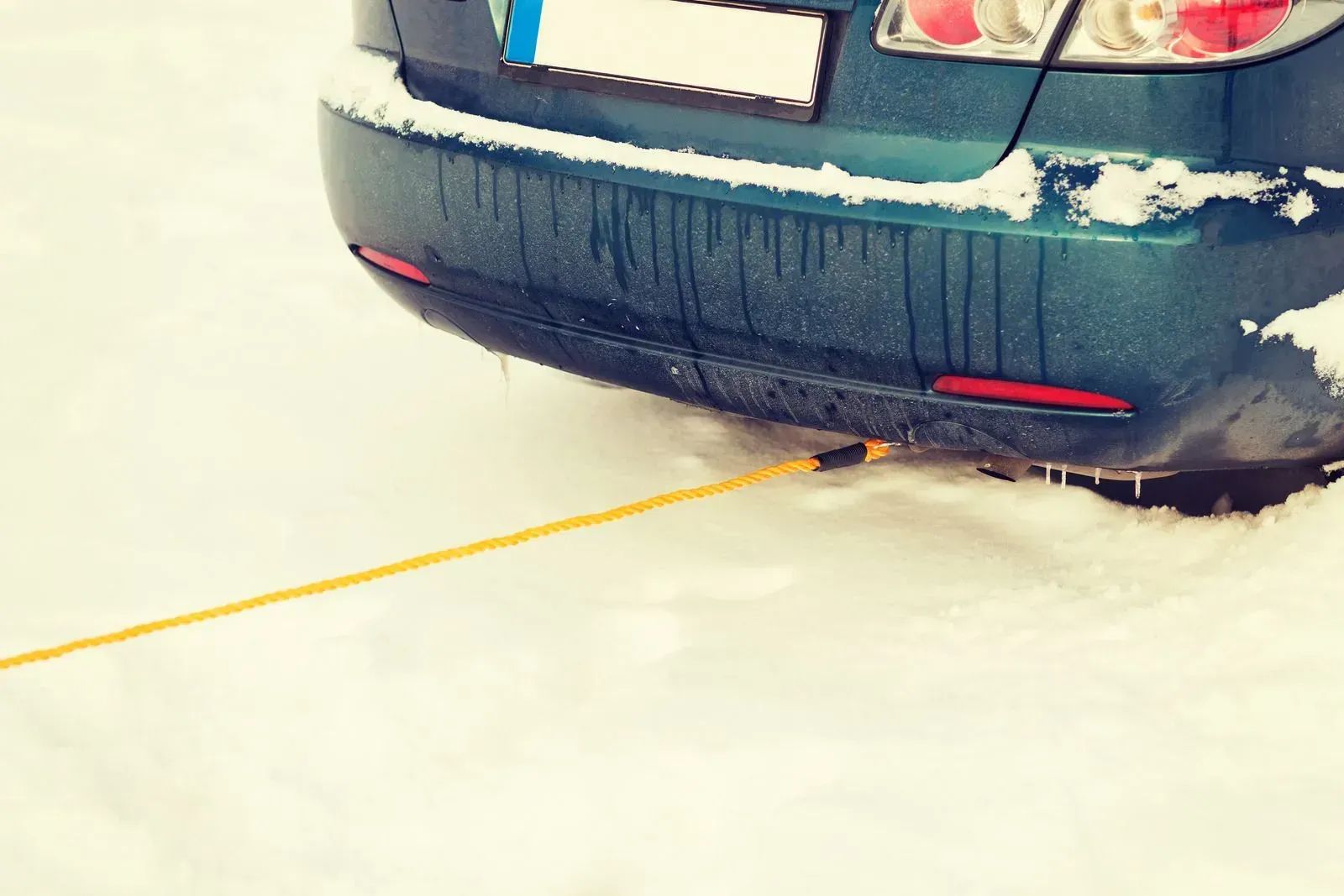
Next comes choosing the pull. A good operator thinks about the direction that offers the least resistance, which is not always straight back the way you came. Sometimes the easiest path is forward through a thinner part of the bank, or at an angle that follows the old tire tracks. The crew may clear the area around the wheels first, then run the winch cable or recovery strap to a proper anchor point on your car.
That anchor point matters. Modern cars have tow hooks, recovery loops, or reinforced mounting points built into the frame, and these are often hidden behind small plastic covers in the bumper. Hooking a chain to a plastic bumper cover, a suspension arm, or an exhaust hanger is how a rescue turns into a repair bill. A trained operator knows where the safe points are and uses the right hardware for each vehicle.
Then the pull itself. The operator takes up slack slowly, keeps the line aligned, and watches the vehicle as it starts to move. You may be asked to put the car in neutral and steer gently, or to sit still with your foot off the pedal. Slow and steady is the goal, because jerking a car out of packed snow is how bumpers crack and tow hooks bend. Once the wheels have solid footing, the crew checks the car over, clears any snow packed under the bumper, and makes sure you can drive away safely.
Special Situations That Change the Approach
Not every snowbank is the same, and some call for more than a simple winch pull.
Cars that are high centered need a different technique. The weight of the car is on the snow, not the tires, so the crew may lift the vehicle slightly, dig out the belly, or slide it off the ridge in a controlled way. Trying to pull a high centered car straight out can drag the underside across hard ice and damage plastic shields, exhaust pipes, and fuel lines.
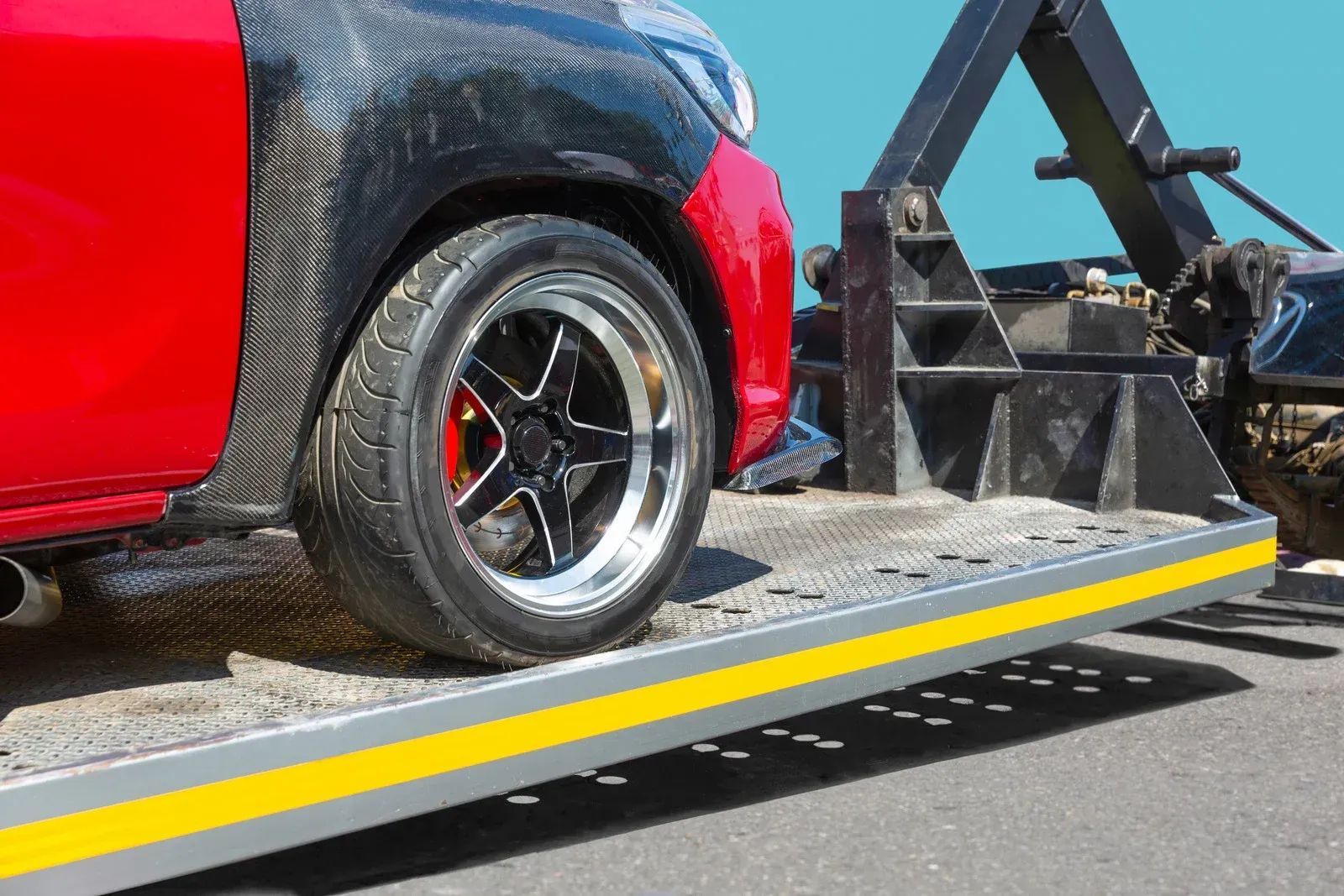
All wheel drive and lowered vehicles often have less ground clearance and sensitive bumpers. In those cases, the operator may choose a flatbed or a low angle approach so nothing scrapes. If the car cannot be driven safely after the pull, the same crew can transport it to your home or a shop.
Rural roads around Germantown Hills, Metamora, and Tremont present drifts rather than plow ridges. Wind packs snow tightly across open fields, and a drift can be several inches deep in a spot and bare pavement ten feet later. Recovery there often involves long pulls across uneven ground, and the crew needs to know where ditches and culverts hide under the snow.
Commercial vehicles, delivery vans, and box trucks require heavier equipment. A loaded truck stuck in a lot or on a hill is a different job from a sedan in a snowbank, and the crew will bring a truck rated for the weight.
How to Help the Crew Help You
You can make the pull go faster and safer with a few simple habits. Stay in the car if you are on or near a road, unless the operator tells you otherwise. Keep your phone charged and your hazards on. If you know where your tow hooks or recovery points are, tell the operator, and mention anything unusual, such as a lowered suspension, a broken part, or aftermarket bumpers.
Take a quick photo of your car before the pull begins. It gives you a record of how things looked, and it helps the operator see the starting condition as well.
TIP: Keep a small kit in the trunk all winter: a compact shovel, a bag of sand or cat litter, a warm blanket, gloves, a flashlight, and a charged phone cable. It will not replace a recovery truck, but it keeps you safe and comfortable while you wait.
Preventing the Next Snowbank Surprise
A few habits cut your odds of getting buried. Slow down well before you reach the end of a plowed street, because the berm at an intersection is usually the tallest and hardest part. Avoid cutting across the edge of a parking lot where plows push their snow. Pick up your speed gently, not suddenly, when you need to cross a ridge, and keep your steering straight so the tires can bite.
Before leaving home after a big storm, clear all the snow from the roof, hood, and around the wheels, and make sure your tailpipe is free. If you park on the street, try to leave space ahead and behind so you are not boxed in when the plow comes by.
And if you do get stuck, remember that calling early is not giving up. A short wait for a recovery crew is better than an hour of wheel spin, a cracked bumper, or a cold walk to find help.
Frequently Asked Questions
Is it safe to stay in my car while I wait for a recovery truck?
Usually yes, and it is often safest, especially at night. Keep your hazard lights on, clear the tailpipe before running the engine, run it only in short stretches, and crack a window for fresh air.
Can I just call a friend with a truck and a chain?
You can, but it carries risk. A chain pulled from a standstill snaps tight and can crack a bumper or fly loose. Use a proper recovery strap on a rated point and keep everyone clear.
Will pulling my car out damage the bumper or undercarriage?
A careful operator picks the right anchor point, pulls slowly in a straight line, and clears snow around the wheels first. Damage usually happens when someone hooks onto the wrong part or yanks the car free.
What information should I have ready when I call?
Your exact location or nearest cross street, the vehicle’s make and model, whether it is front, rear, or all wheel drive, and how deep the snow is. Mention any lane of traffic, slope, or ice.
How is snow recovery different from a regular tow?
A tow moves a vehicle that cannot be driven. A snow recovery gets a stuck vehicle back onto solid ground using winching, digging, and anchoring. Often you can drive away, though a damaged car gets towed.
Should I keep trying to drive out while I wait?
No. More wheel spin polishes the snow into ice, digs the car lower, and strains the drivetrain. Rest, stay warm, keep the tailpipe clear, and let the crew handle the pull when they arrive.
Call Early And Save The Hard Part
A car buried in a snowbank stays buried no matter how many times you rock it, and every extra attempt packs the ice tighter under your tires. The first ten minutes matter most: stop spinning the wheels, clear the tailpipe, turn on the hazards, and read whether you are dealing with loose snow or a hardened plow berm. Calling early is not giving up. A short wait for the right truck beats an hour of wheel spin and a cracked bumper.
Dependable Towing & Recovery
has spent 50
years pulling cars out of snowbanks across Peoria, IL, where plow ridges and wind-driven drifts off the open farm ground catch drivers every winter. Checking the tailpipe, finding the correct recovery point, and winching along the path of least resistance is what separates a clean pull from a repair bill. Letting a crew handle the heavy part keeps you off the cold roadside and gets you home on solid pavement rather than stuck deeper than you started.